
Human Atlas
The body is not flat.
Amara Osei has an anatomy exam in nine days.
One flat diagram. One part she cannot place.
So she opens the body instead.
It opens into its systems.
- The problem. Amara Osei, a second year medical student, studies at night for an exam in nine days. Her book shows the body flat, and one part will not sit still in her mind.
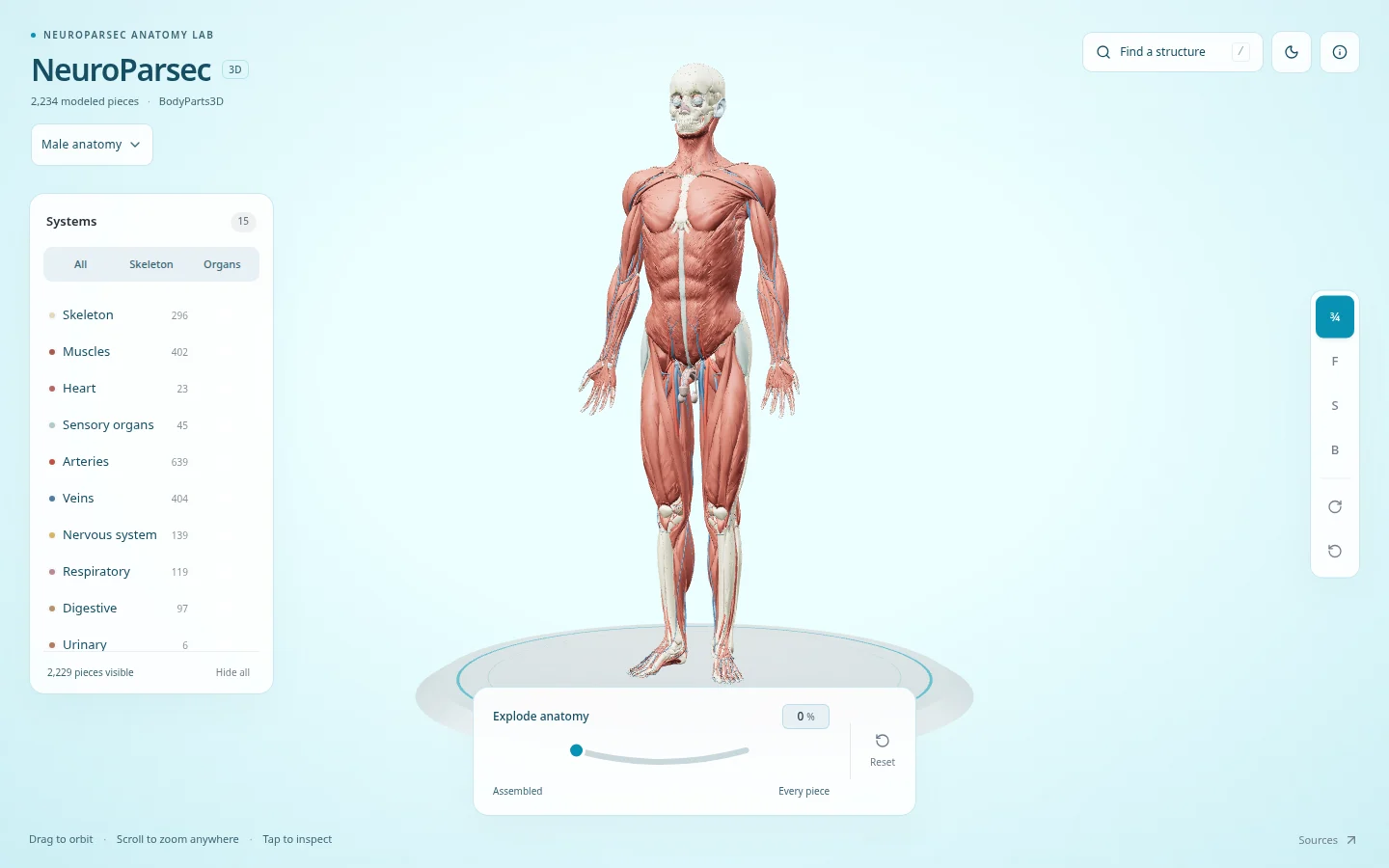
- The body opens. She opens the explorer. The whole body stands in front of her, and she can turn it and move in close.
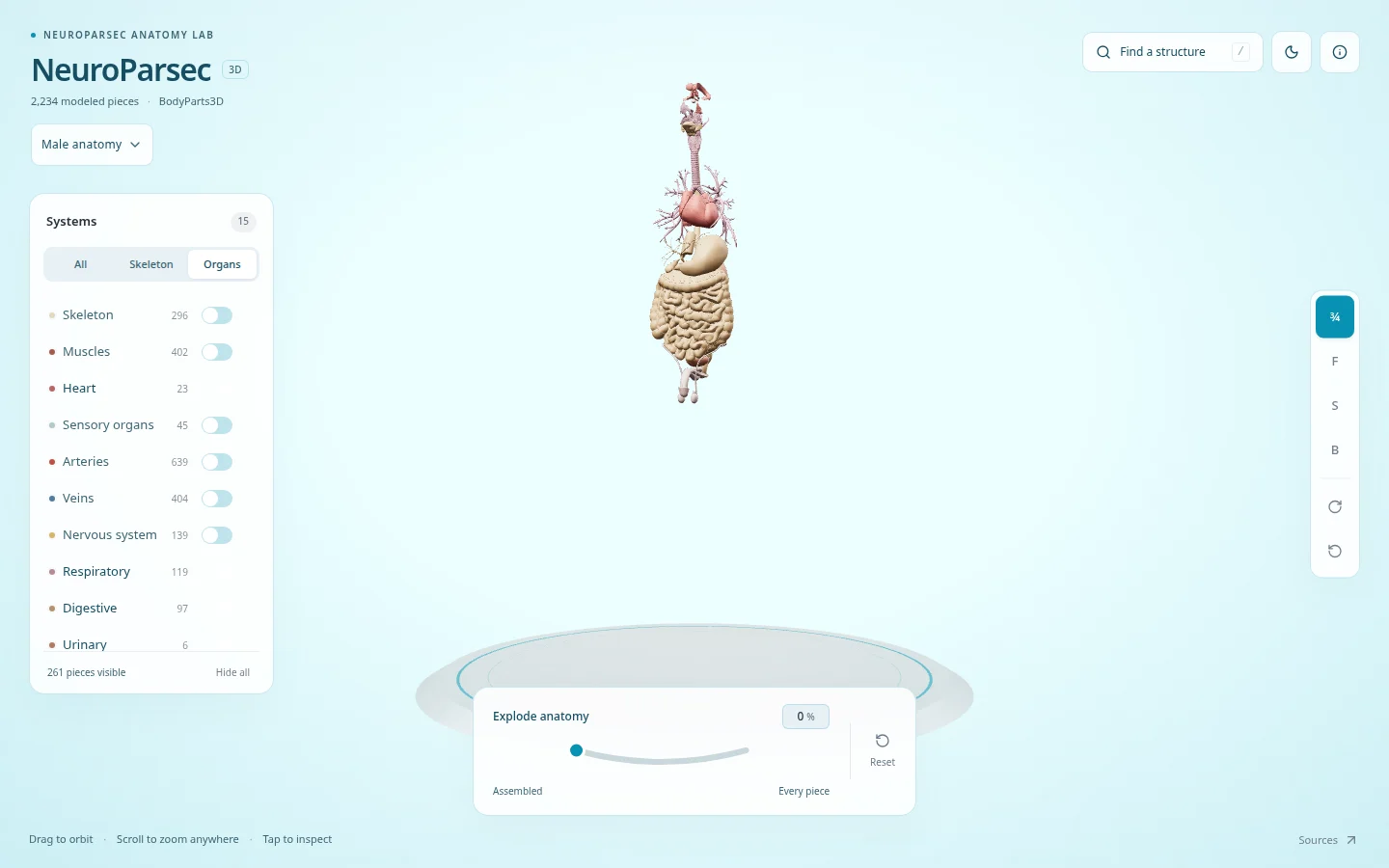
- It opens into systems. She lifts one system out of the whole: the organs, each in its place, with the heart among them.
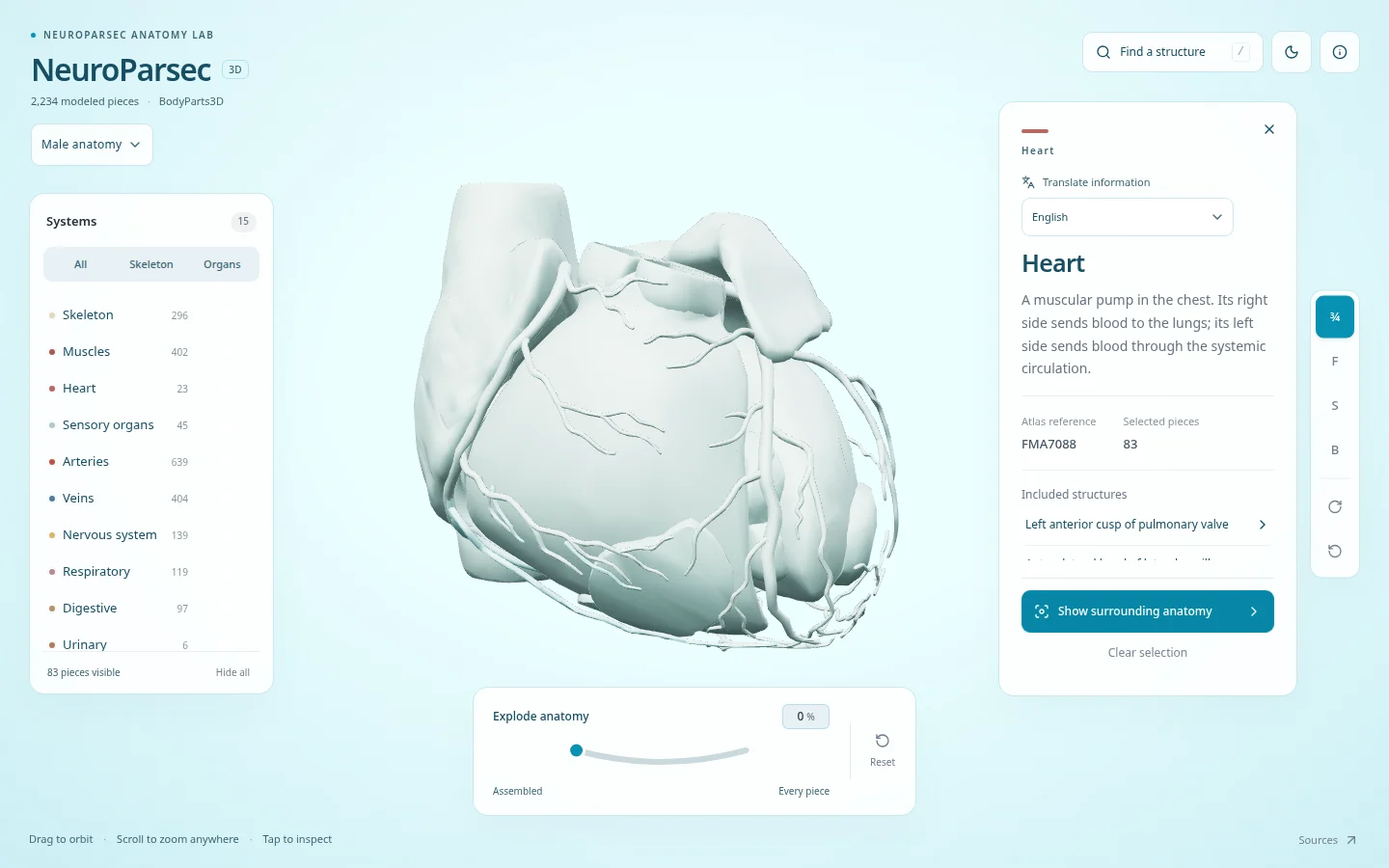
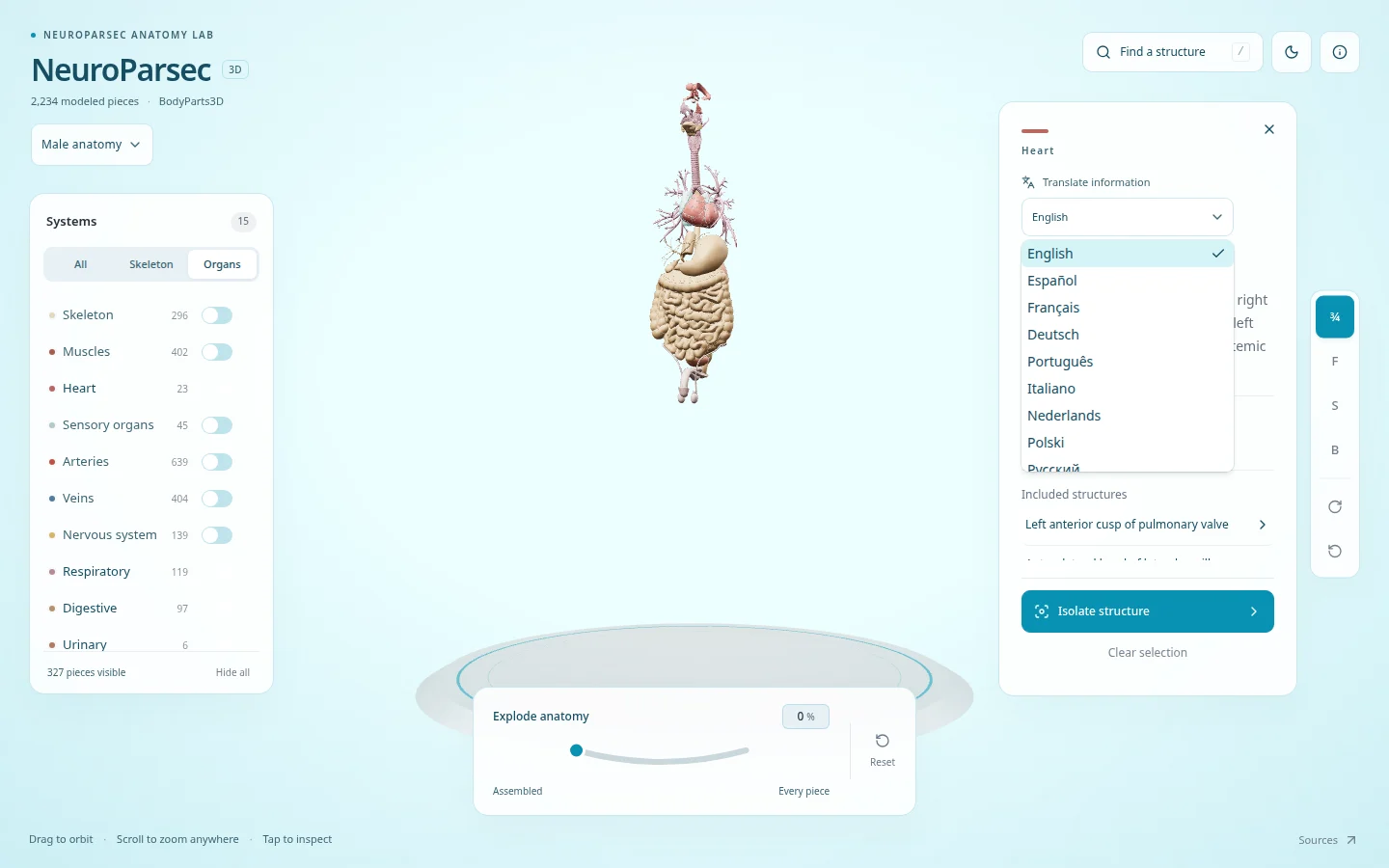
- The part names itself. She finds the heart, sets it apart, and reads about it beside the model. The part she could not place now has a place.
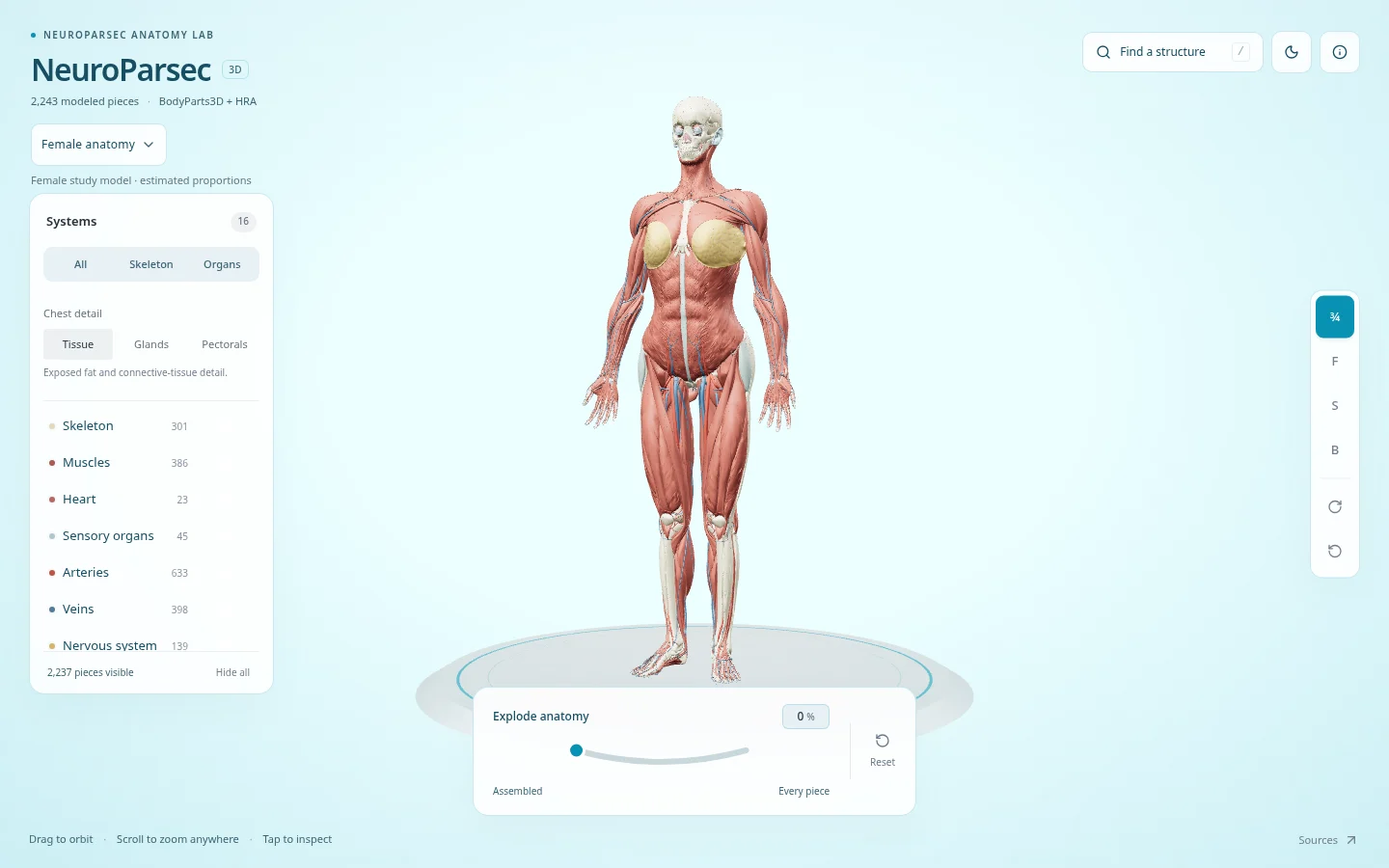
- A second body. She switches to the female body without leaving her session, and keeps studying.
- Her own words. The names and notes can be read in her own language, so a hard word never blocks the learning.
- The result. The body is not flat any more. She can walk around inside it.
The explorer, up close
Real screens. Nothing staged.
Every picture on this page is a real screen from the live explorer, taken as it runs.
The bodies, counted
2,234
Modeled pieces in the male body.
2,243
Modeled pieces in the female body.
Counts shown in the live explorer itself: the male lab and the female lab, checked 28 October 2026. Two bodies, two counts, never mixed into one.
The problem
Flat diagrams hide depth.
A book shows the body from one side, on one flat page. It cannot show what sits in front of a part, what sits behind it, or what touches it. Students learn the names, then meet the real body and have to learn the places all over again.
Good models stay out of reach.
A real anatomy model costs a lot and lives inside a school or a hospital. Most students see one for a short class, if at all, and never get quiet time alone with it. The best way to learn the body is the way fewest students can use.
One body and one language is not enough.
Most learning tools show one body type, in one language. Half the body is missing, and a student who thinks in another language has to fight the words before she can learn the science. Both gaps close doors that should stay open.
How it works
Open it. Take it apart.
Five moves, in the order a student makes them. A move you can do with a mouse or a finger: no setup, no install.
- 01OpenThe full body loads in a web browser
- 02Explore by systemSkeleton, muscles, heart, nerves and more
- 03Isolate and readOne part alone, its details beside it
- 04Switch bodyMale and female, in the same session
- 05Translate labelsNames and notes in your own language
Turn the body, pull it apart, put it back: the places stay in the mind because the hands learned them too.
Learn the body by walking around it.
If you teach, learn, or build for health, come and see where this can go.
Read the full project page Visit the live preview
Human Atlas is in active development. The explorer is real and runs today; the work on it continues. Amara Osei is fictional, and her exam week stands for the real study nights of medical students everywhere. Screens on this page come from the live explorer build, captured 9 November 2026.
By NeuroParsec. Intelligence for Better Health.
Anatomy data: BodyParts3D (CC BY 4.0). Female anatomy set: the HRA/HuBMAP female set by Browne and Schlehlein (CC BY 4.0).